Introduction
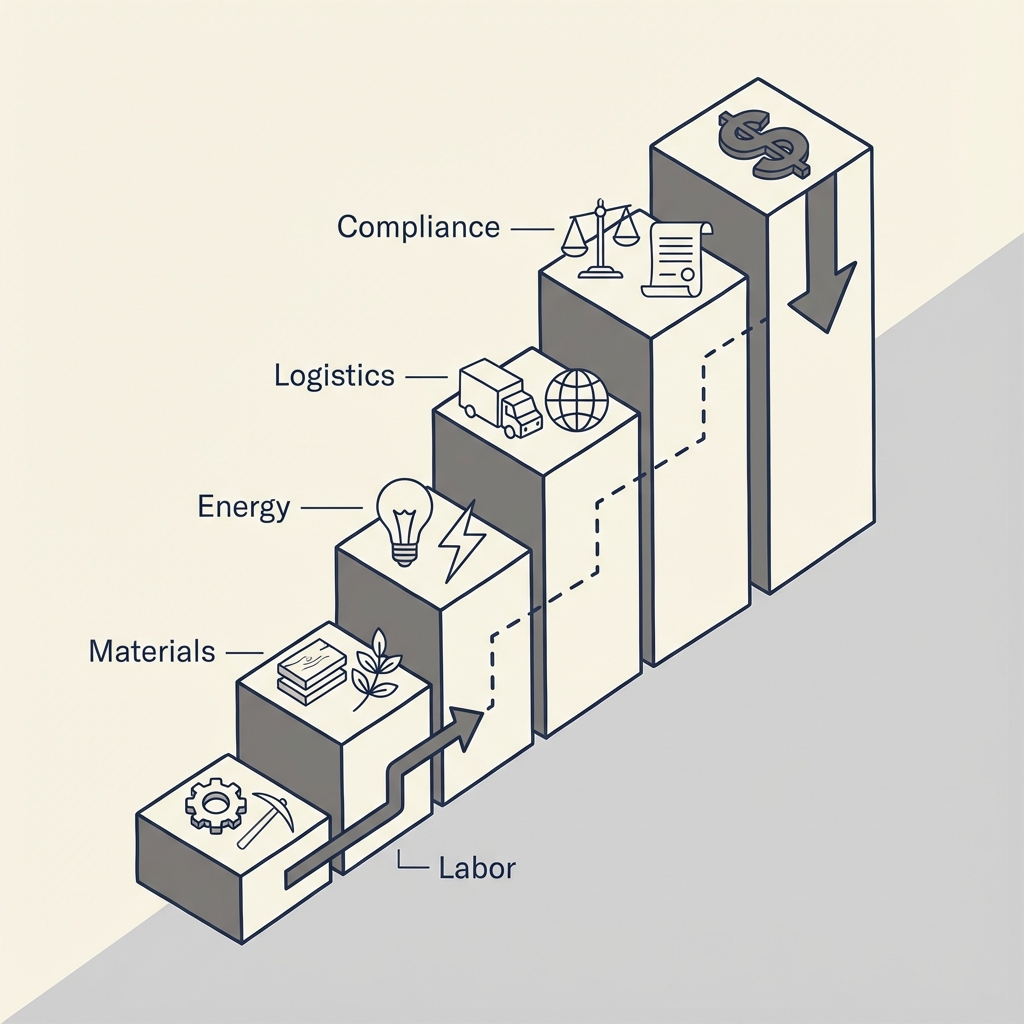
The global market landscape is shifting. As buyers and industry professionals navigate the complexities of market insight, it becomes crucial to understand the underlying mechanics rather than just the surface-level pricing. An economic breakdown of raw materials, labor, energy, and logistics in the cost equation.
This analysis delves into the reality of What Actually Drives Manufacturing Costs Globally, moving beyond common misconceptions.
The Core Problem
Many stakeholders approach this sector with a simplified view. The direction of this analysis focuses on Cost structure. However, the reality on the ground is often far more nuanced.
- Structure: The industry is fragmented.
- Costs: Hidden variables often outweigh the visible tag price.
- Risk: Misunderstanding the specific dynamics of this region or sector leads to failure.
Cost structure: A Closer Look
When we examine the specifics, we see a recurring pattern. For instance, in the context of recent market shifts, the "standard" approach often fails because it ignores the incentive structures of the suppliers.
"To understand the market, one must ignore the brochure and look at the factory floor."
Whether dealing with China, Vietnam, or broader Asia, the fundamental rule remains: control the process, or the process controls you.
Data and Reality
Let's look at the structural difference.
| Factor | Common Perception | Market Reality | | :--- | :--- | :--- | | Cost | Lowest price wins | Total landed cost matters | | Speed | Faster is better | Stability beats speed | | Quality | Inspection fixes all | Process defines quality |
Conclusion
Ultimately, success in this domain requires a shift in perspective. An economic breakdown of raw materials, labor, energy, and logistics in the cost equation. By focusing on Cost structure, businesses can build a more resilient and transparent operation.
This is not just about buying; it is about understanding the architecture of the industry.