Introduction
Many buyers treat shipping as the final step of sourcing.
They negotiate the product, confirm the sample, place the order, and only then ask about freight.
This is a mistake.
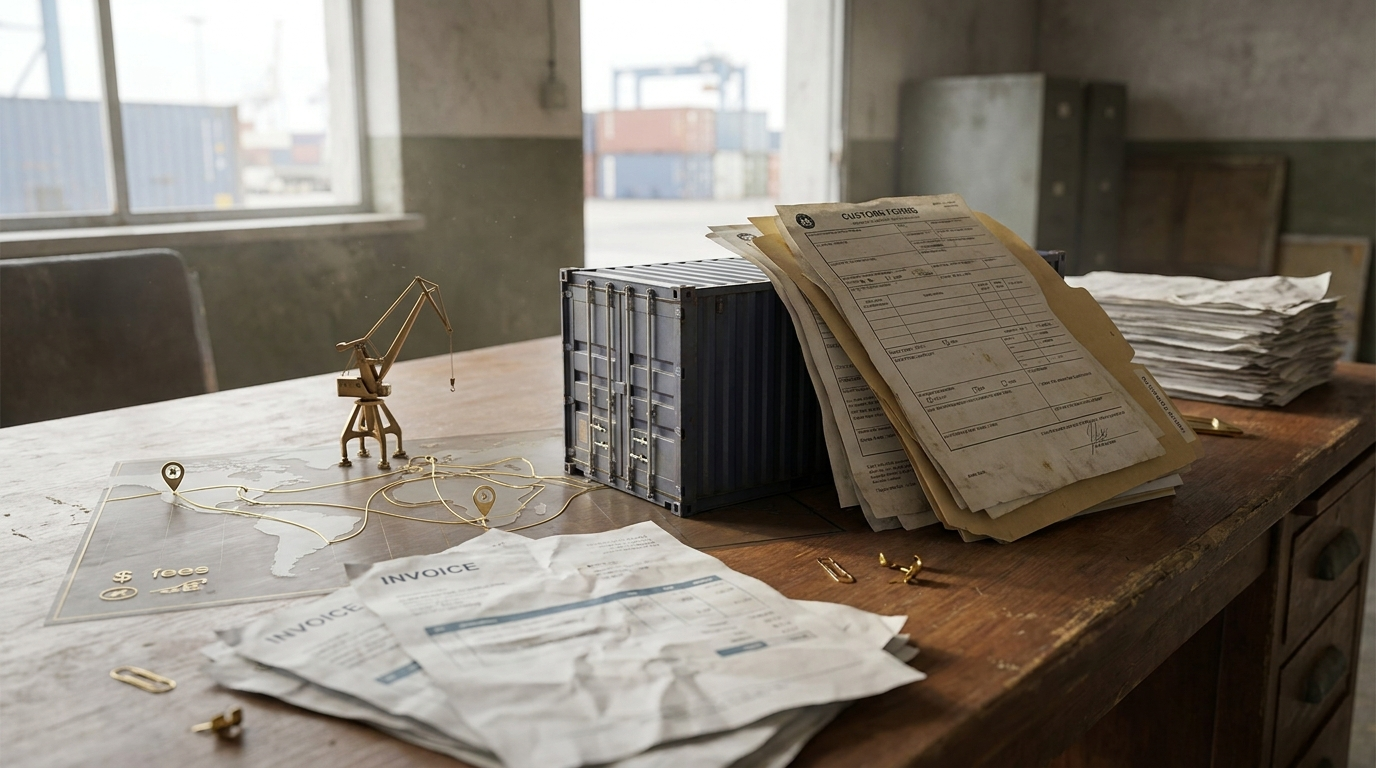
International shipping is not just transportation. It is a chain of responsibilities involving pickup, export documents, customs, port handling, freight, import clearance, taxes, warehousing, and final delivery.
Buyers often lose money not because the freight rate was too high, but because they misunderstood who was responsible for each step.
Freight Rate Is Not the Whole Cost
A low freight quote can be misleading.
The quoted price may exclude:
- pickup from factory
- export declaration
- port charges
- documentation fees
- customs clearance
- import taxes
- warehouse storage
- delivery to final address
- inspection or hold fees
A buyer may compare two quotes and choose the cheaper one, only to discover later that the cheaper quote covered fewer services.
Shipping cost must be compared by scope, not by number.
FOB, CIF, and DDP Confusion
Many buyers use trade terms without fully understanding them.
FOB, CIF, and DDP can change who controls risk.
| Term | Common Misunderstanding | Practical Issue | | --- | --- | --- | | FOB | Buyer thinks shipping starts at the factory | Responsibility usually shifts at the port | | CIF | Buyer thinks delivery is included | Destination charges may still appear | | DDP | Buyer thinks all risk disappears | Quality of customs handling depends on the forwarder |
DDP is attractive because it feels simple. But if the forwarder is weak, the buyer may still face delay, poor tracking, or customs problems.
The easiest term is not always the safest term.
Timing Creates Hidden Losses
Shipping delays create costs beyond freight.
A shipment delay may cause:
- missed retail launch
- customer refunds
- warehouse congestion
- seasonal product failure
- cashflow pressure
- extra storage fees
- emergency air freight
For seasonal products, the real cost of delay may be greater than the cost of the product itself.
This is why logistics planning should begin before production ends.
The Role of the Forwarder
A forwarder is not just a person who gives a shipping price.
A good forwarder helps control documents, routing, customs expectations, and delivery timing. A weak forwarder simply collects cargo and reacts when problems occur.
Buyers should ask:
- What exactly is included in the quote?
- Who handles export declaration?
- Who handles customs clearance?
- What happens if customs inspects the shipment?
- Are destination charges included?
- Who is responsible for storage if delayed?
The answers matter more than the first quoted price.
Why Small Buyers Are More Exposed
Small buyers often rely on supplier-recommended forwarders because it feels convenient.
This can work. But it also means the buyer may not know whether the forwarder is protecting the buyer, the supplier, or simply the shipment.
Small buyers should avoid treating logistics as an afterthought.
Even a simple order should have a shipping responsibility map.
Conclusion
Buyers usually lose money in international shipping because they compare freight rates instead of logistics responsibility.
The real risk sits in unclear terms, missing fees, weak customs handling, poor timing, and lack of accountability.
A serious buyer should not ask only:
“How much is shipping?”
The better question is:
“What exactly happens from factory door to final delivery, and who is responsible at each step?”